Teething Troubles: Why Your Puppy’s Teeth Might Need a Vet’s Help
Puppies are often “mouthy” as part of their normal teething phase, exploring the world with their mouths and easing gum discomfort as their adult teeth begin to develop. However, sometimes this behaviour isn’t simply teething – as we discovered with one particularly charming little Jack Russell Terrier named Vinnie.
Vinnie’s Story
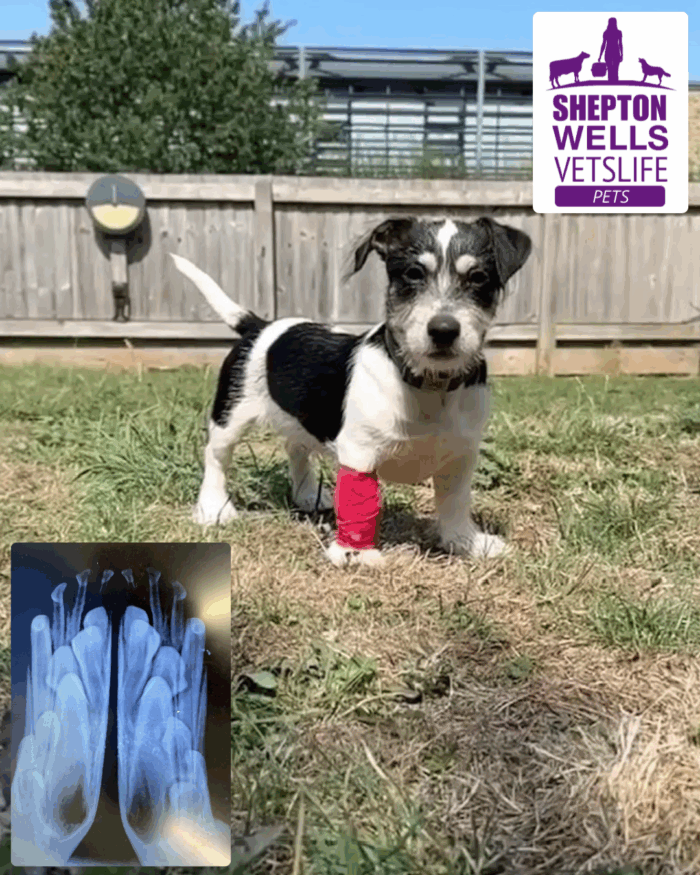
Vinnie came to see us for his routine puppy vaccinations at the Wells branch. During the consultation, his owner mentioned that he was quite mouthy and tended to nip and chew more than expected. On examination, we found an underlying dental issue that explained his behaviour and discomfort.
Vinnie’s deciduous (baby) lower canine teeth were lingually displaced, meaning they were positioned further towards the inside of the mouth, close to the tongue, rather than vertically aligned. Instead of sitting neatly in front of the upper canines, the tips of these teeth were pressing into the hard palate (roof of the mouth). Over time, this caused ulceration and small puncture wounds, leading to significant pain and irritation.
This condition is known as Lingually Displaced Mandibular Canines (LDMC).
Why LDMC Is a Problem
Although LDMC can seem like a minor dental quirk, it can lead to several serious issues if not treated promptly.
- Pain and oral trauma
The sharp tips of the displaced canines repeatedly press into the soft tissue of the palate, creating sores or even penetrating the mucosa. This is extremely uncomfortable and can lead to secondary infection. Puppies may drool excessively, chew strangely, resist handling around the face, or hold their mouth slightly open to relieve pressure. - Abnormal jaw development
The position of the lower canines can interfere with normal mandibular growth. Because the displaced teeth “lock” against the palate, the lower jaw cannot move or lengthen properly. As the puppy grows, this can result in skeletal deformities such as mandibular shortening or bowing, permanently affecting the bite. - Future dental complications
The adult lower canines develop just inside the baby canines. If the deciduous teeth remain in the wrong place, the permanent canines almost always erupt in the same abnormal position. This can lead to chronic pain, palate damage, and even long-term malocclusion (incorrect bite alignment).
Treatment: Surgical Extraction
The preferred treatment for LDMC is surgical removal of the affected deciduous teeth. The procedure should ideally be performed before the adult canines erupt, usually between 22–24 weeks of age. Early intervention helps prevent ongoing trauma and reduces the likelihood of the adult teeth erupting abnormally.
This is a technically challenging procedure because the roots of deciduous canine teeth are long and delicate – approximately two to three times the length of the visible crown. The roots are also thin and curved, making them prone to fracture if extracted blindly.
Recovery and Outcome
Vinnie’s surgery went beautifully. Both of his displaced lower canines were successfully removed, and post-operative radiographs confirmed that no root fragments remained.
He recovered quickly from anaesthesia, and his owner reported a marked improvement almost immediately – Vinnie was eating enthusiastically, far less mouthy, and clearly more comfortable. Within days, the small ulcers on his palate had begun to heal.
Regular monitoring is important after such a procedure to ensure the adult canines erupt normally. In most cases, early intervention prevents further complications, and no additional treatment is required.
Vinnie is now thriving – happy, comfortable, and still every bit the lively little Jack Russell he was before, only without the pain that had been troubling him.