A Rocky Ride: Bumble Bee’s Journey to Emergency Surgery
Owners are often the first to notice when something isn’t quite right: a missed meal, a quieter walk, or a subtle change in behaviour. For Bumble Bee the black labrador, a typically active and enthusiastic dog, what began as a mild episode of vomiting soon developed into a far more serious condition.
He was first presented after several episodes of vomiting over a short period. Despite this, he remained bright, hydrated, and was still drinking normally. His clinical examination at that stage was reassuring, with no significant abnormalities detected. In cases like this, where signs are often mild and self-limiting, symptomatic treatment alongside close monitoring at home is a sensible and appropriate approach.
Over the following days, the vomiting settled, but his owners noticed a gradual change. Bumble Bee became quieter, lost interest in food, and seemed generally subdued. Although he still showed some interest in going outside and interacting, his usual energy had clearly diminished. Trusting their instincts, his owners returned for reassessment when he failed to improve.
At this stage, although he appeared subdued, there were still no clear findings on examination to explain his symptoms. Further investigations were discussed, but later that same day his condition changed more noticeably. He became increasingly lethargic, began vomiting again, and showed clearer signs of discomfort.
An out-of-hours reassessment confirmed a significant deterioration. Bumble Bee was now much quieter, with a markedly elevated heart rate and a more painful abdomen. Given this change, the decision was made to proceed with further diagnostics, including imaging, to rule out more worrying underlying causes that had not yet been apparent.
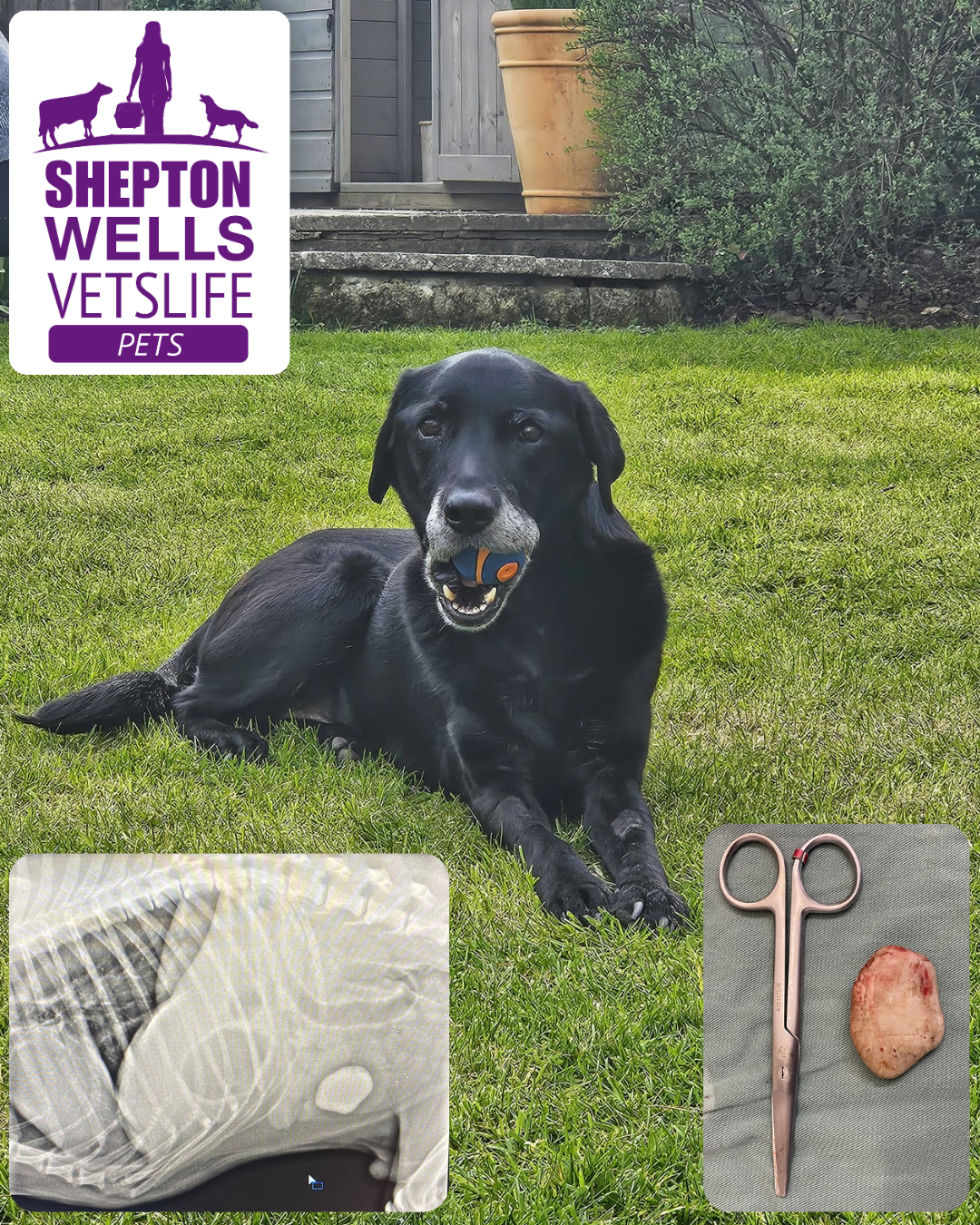
Ultrasound examination revealed markedly dilated intestinal loops, raising concern for an obstruction. This was confirmed on X-rays, which identified a foreign object lodged within the intestine.
There had been a passing mention that Bumble Bee chewed stones as a puppy, something that had not occurred for years. Combined with the appearance of the object on imaging, this made a stone the most likely cause, although the exact nature of the obstruction could only be confirmed at surgery.
An exploratory laparotomy was performed, during which a large pebble was located within the small intestine. The surrounding tissue showed bruising and inflammation, but no further obstructions were identified. The stone was carefully removed via a small incision in the intestine, which was then carefully repaired. The remainder of the gastrointestinal tract appeared healthy.
Although the surgery itself was successful, recovery was gradual. As is common following intestinal surgery, Bumble Bee was slow to regain his appetite and experienced diarrhoea while his gut function returned. He required ongoing supportive care, including fluids, pain relief, and medication to manage nausea and encourage gut movement.
Blood tests during recovery showed a mild drop in protein levels, which contributed to fluid accumulation under the skin. While this can appear concerning, it is a recognised post-operative change and was managed with careful monitoring.
An important part of Bumble Bee’s care was recognising what environment would support him best. He was understandably anxious in the hospital setting, and once stable, a decision was made to continue his recovery at home with close follow-up. This allowed him to settle more comfortably, while still being carefully monitored.
At home, with the dedication of his owners, Bumble Bee’s progress steadily improved. He began eating small amounts, his comfort levels increased, and his demeanour gradually brightened. Over the following days, he regained his strength, becoming more engaged, more active, and eventually returning to enjoying walks and normal daily life.
Bumble Bee’s story highlights how clinical signs can evolve over time, and how important it is to reassess when things don’t follow the expected course. It also underlines the value of attentive owners, whose persistence and willingness to act ensured he received the care he needed at every stage.
Most importantly, it is a story of resilience and teamwork between patient, owners, and veterinary staff. Despite a sudden deterioration, emergency surgery, and a slow recovery, Bumble Bee has made an excellent return to health and is now back to enjoying life as he should.