

When a Routine Case Isn’t Routine: Raffles the Greyhound’s Story
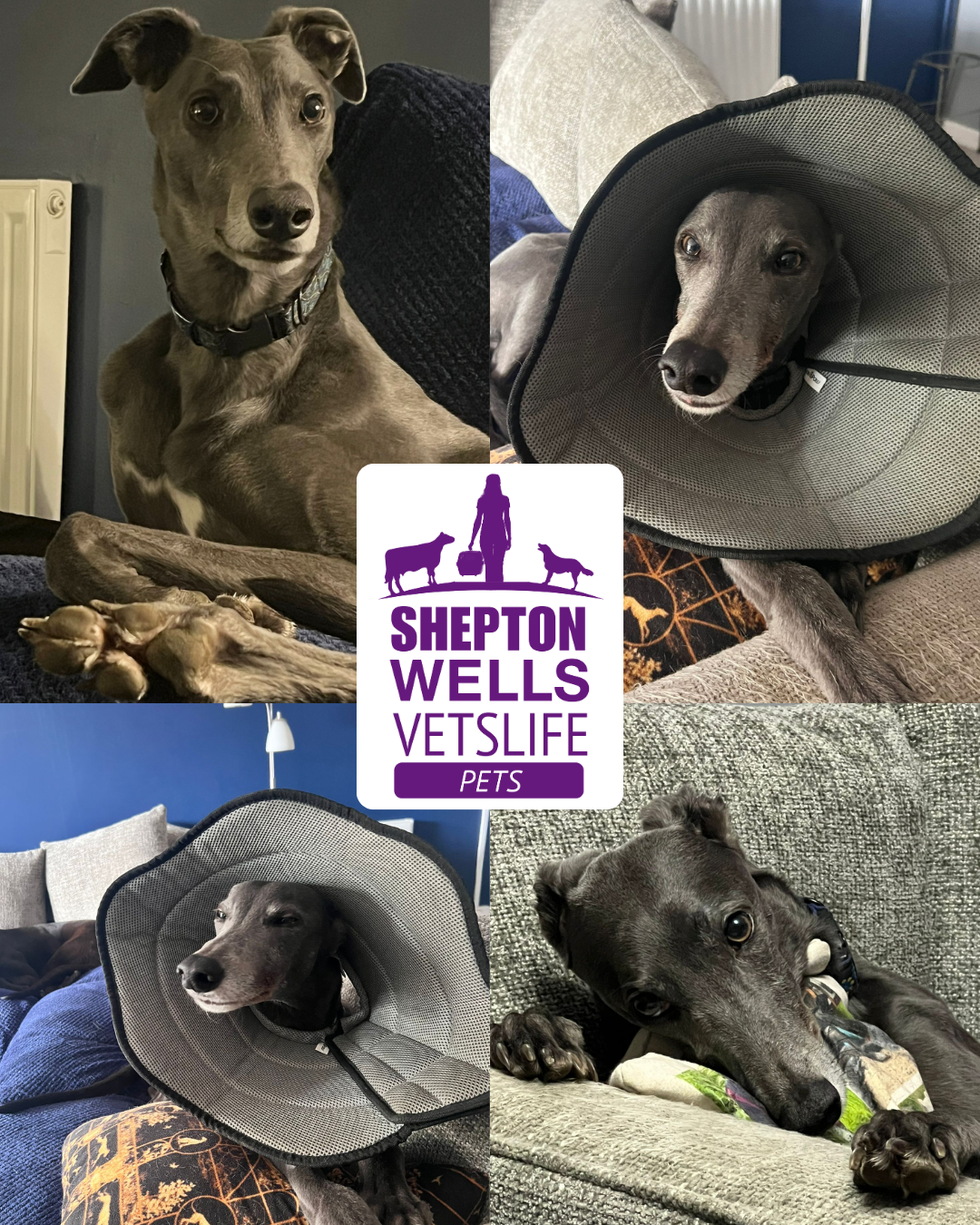
At our practice, no two days are ever quite the same. Recently, a gentle greyhound named Raffles reminded us just how important it is to stay vigilant – even during what initially appears to be a straightforward case.
Raffles initially came to us with a dog bite wound that required surgical repair. While preparing to suture the injury, we encountered an unexpected finding: a mass on his spleen. Discoveries like this highlight how underlying conditions can sometimes go unnoticed until surgery or imaging brings them to light.
To investigate further, we performed a fine needle aspirate. Although the sample didn’t allow us to identify the exact nature of the mass – a not uncommon outcome – it did confirm that the growth originated from the spleen. Given the potential risks, we recommended surgical removal. Splenic masses can rupture without warning, leading to a serious condition called haemoperitoneum (or haemoabdomen), where blood rapidly accumulates in the abdominal cavity and can become life-threatening.
Splenic masses in dogs can arise from a variety of causes. Some are neoplastic, including malignant conditions such as haemangiosarcoma or benign tumours like haemangioma. Others are non-neoplastic, such as nodular hyperplasia, haematomas, or cysts. In some cases, trauma or vascular changes may also play a role. Unfortunately, it is often difficult to determine the exact cause without removing the spleen and submitting it for histological analysis. For this reason, surgery is frequently the safest and most definitive approach.
During Raffles’ procedure, we performed a splenectomy, carefully ligating the blood vessels before removing the spleen. As a deep-chested breed, Raffles is naturally at higher risk of developing gastric dilatation-volvulus (GDV), a dangerous condition where the stomach twists on itself. Because the removal of the spleen and mass created additional space within the abdomen, we took the opportunity to perform a prophylactic gastropexy. This procedure secures the stomach to the abdominal wall, significantly reducing the risk of GDV in the future.
At the same time, we addressed the original bite wound, which had partially broken down due to infection. It was successfully cleaned and closed during the surgery.
The final piece of the puzzle came with the histology results – and they brought very good news. The mass was non-neoplastic, meaning it was not cancerous. Raffles had, fortunately, avoided a far more serious diagnosis.
His recovery has been smooth, and he is now back to his usual self – graceful, energetic, and enjoying life as only a greyhound can.
Raffles’ story is a powerful reminder that even routine procedures can uncover unexpected findings. It also highlights the value of thorough investigation, proactive surgical decision-making, and personalised care. By anticipating potential complications and addressing them early, we can give our patients the best possible outcomes – even when surprises arise along the way.

Author –