Back on Her Paws: Teasel’s Story
Most cat owners are familiar with cuts, grazes, or the occasional thorn caught in a paw. But sometimes changes to a cat’s feet can be caused by a much less common condition affecting the immune system. This was the case for a young cat who came to see us with a painful swelling and ulcer on one of her paw pads.
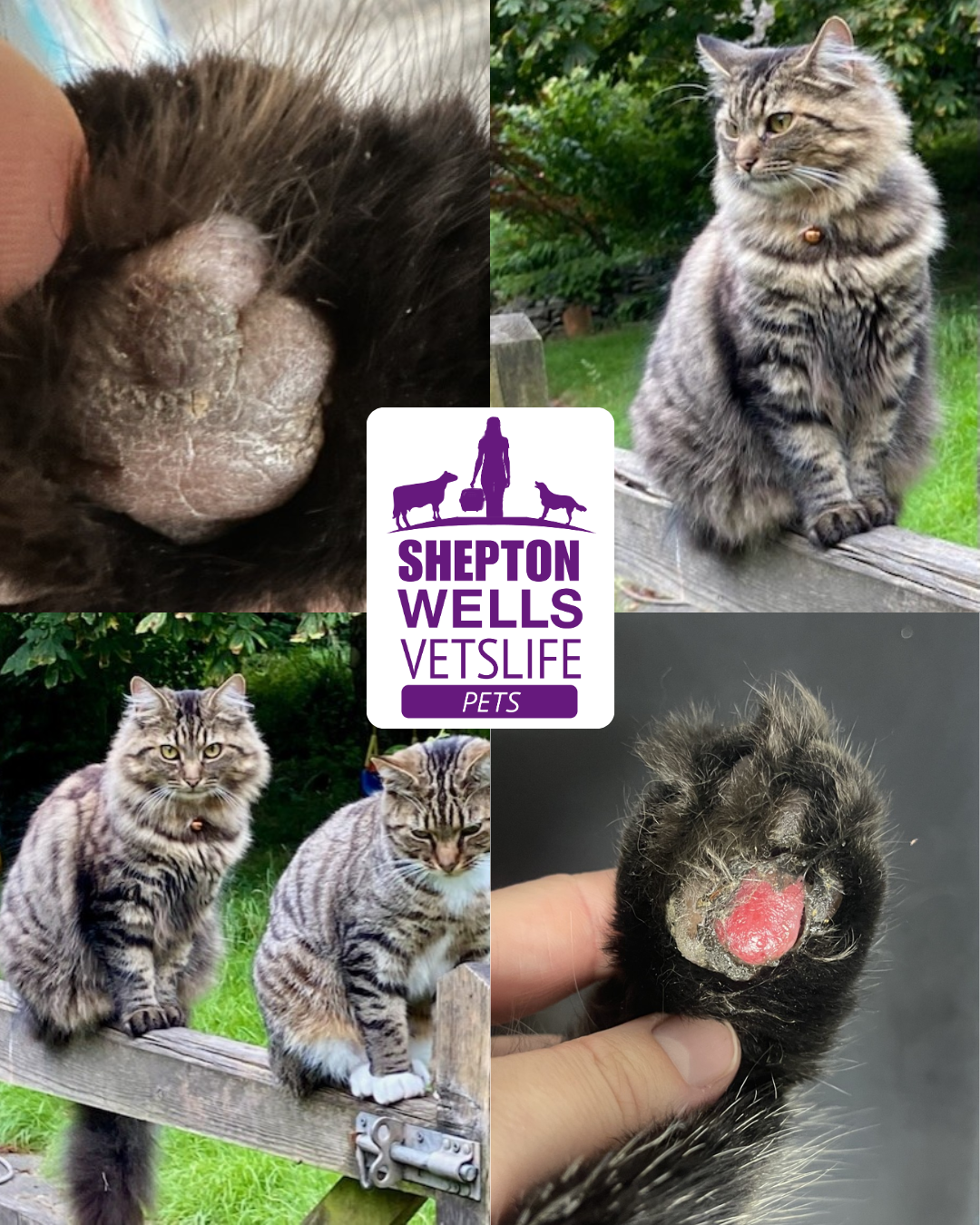
At just two years old, Teasel was brought to the clinic after her owner noticed a sore developing on her paw. The lesion had appeared suddenly and seemed to be getting progressively worse. Although she remained bright and well in herself, she was intermittently lame and had started choosing to stay indoors more often.
On examination, the central pad of her left front paw was ulcerated, bright red, and painful. The normal texture and structure of the pad had been lost, leaving a soft, swollen, sponge-like surface that bled easily. We also noticed subtle changes affecting some of her other paw pads, which had developed characteristic pale white streaks and a similarly soft texture, although these areas were not painful.
These findings were highly suggestive of feline plasma cell pododermatitis (PCP), often nicknamed “pillow foot” because of the soft, swollen appearance it gives affected paw pads. PCP is an uncommon condition thought to occur when the immune system becomes overactive within the paw pads. Large numbers of plasma cells, a type of immune cell, accumulate within the tissue and cause inflammation. As a result, the pads become swollen, soft, and doughy to the touch. In some cases, they may develop a purple discolouration, while more severe cases can ulcerate and become painful, as happened here. Although the exact cause remains unclear, the condition is generally considered to be immune-mediated. Some cats show no signs of discomfort, while others may become lame or reluctant to exercise if the affected pads become ulcerated.
There are two main medical treatment options for feline plasma cell pododermatitis. One is doxycycline, an antibiotic that also has anti-inflammatory and immune-modulating effects, while the other is treatment with corticosteroids, which help reduce the abnormal immune response causing the condition. After discussing both options with Teasel’s owner, we elected to start treatment with prednisolone, keeping doxycycline in reserve should an alternative approach be needed. As this condition can take several weeks to respond to treatment, Teasel’s owner was advised that improvement may not be immediate and was encouraged to return for regular rechecks so we could monitor healing and adjust the treatment plan if necessary.
Three weeks later, we were delighted to receive a positive update – on examination the ulcerated pad was healing well with far less inflammation. The paw was becoming more comfortable, and healthy tissue was gradually replacing the damaged area. As a result, we continued treatment until the clinical signs had resolved before gradually tapering the medication to minimise the risk of relapse.
Teasel’s case is a great reminder that not every condition follows the same path to recovery, and that some patients require ongoing monitoring and adjustments to their treatment plan along the way. Although feline plasma cell pododermatitis is relatively uncommon, the outlook is generally very good when it is recognised early and managed appropriately. With the right treatment and regular follow-ups by working closely with owners, most cats go on to regain comfortable, healthy paws and return to enjoying their normal adventurous lives.