

Rapid Response to GDV: Maisie’s Emergency Case
On a very normal morning, after a normal breakfast and a normal walk, Maisie threw her owners a curveball and began unproductively retching. While the occasional gastrointestinal upset wasn’t uncommon for her, her owners quickly recognised that this was different and phoned us straight away.
Our client care team responded by booking Maisie in for an emergency appointment as soon as she could get to us, and shortly afterwards she was being assessed by one of our vets, Jen. Maisie was still bright and walked into the consulting room wagging her tail, but Jen identified that her heart rate was greatly increased at 160 beats per minute, and her abdomen was distended, firm and painful. This raised suspicion of gastric bloat or, more seriously, gastric dilatation and volvulus (GDV).
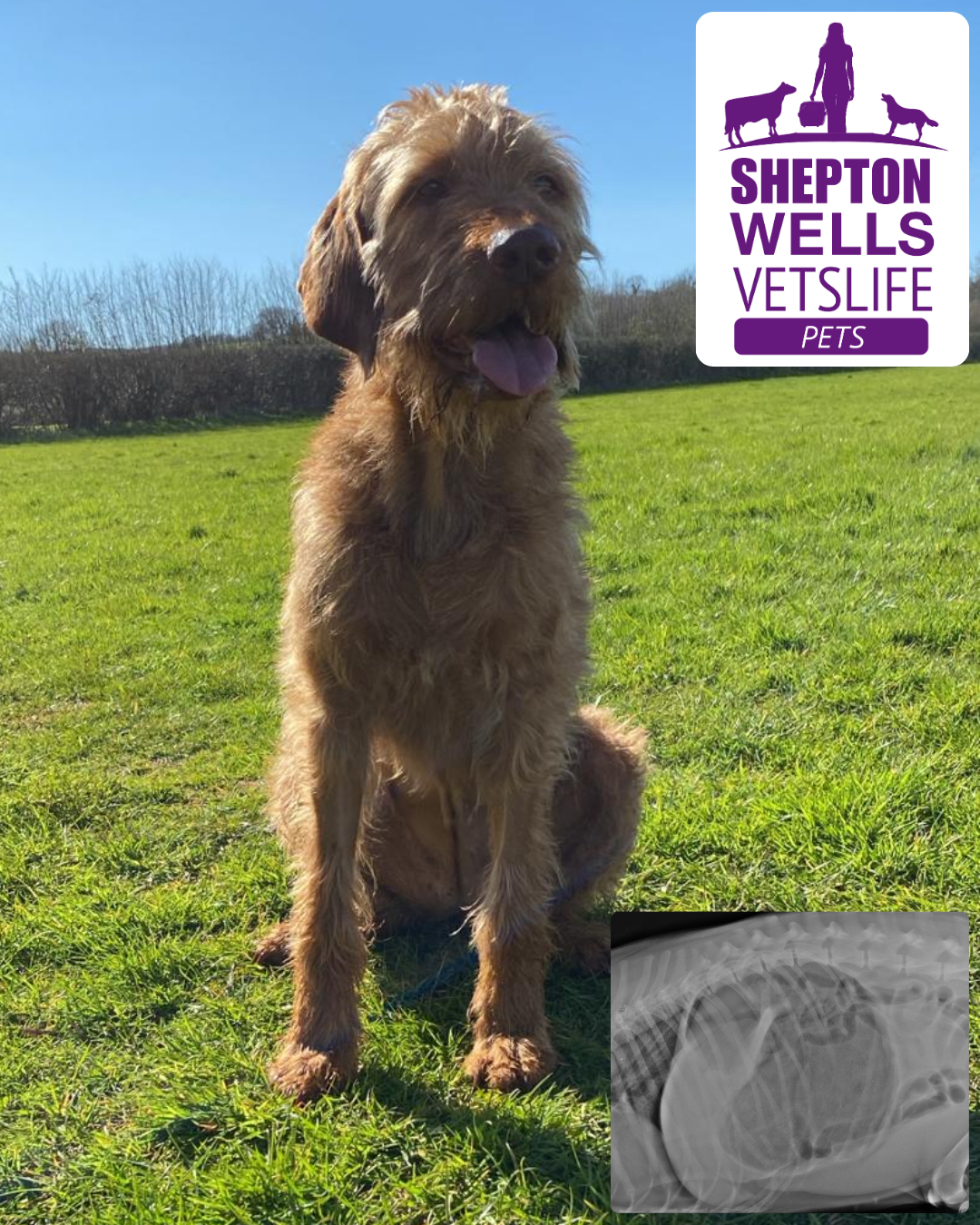
Maisie was admitted for an urgent abdominal radiograph (X-ray), which confirmed a GDV.
A GDV is a surgical emergency in which the stomach twists on itself, blocking the passage of the gut and becoming distended with trapped food, fluid and gas. Normal blood flow to the abdominal organs is also compromised, and the spleen is often caught up in the process. It is a condition that can affect any dog, but the main contributing factors include large, deep-chested breeds, active breeds, large meal sizes, and exercise either on a very empty or very full stomach.
Common presenting signs include excessive salivation and unproductive retching (as the stomach contents are unable to pass), sudden abdominal bloating, lethargy and weakness. The progression is usually rapid – often within an hour – making urgent veterinary care essential.
Once we had confirmed that Maisie had a GDV, all hands were on deck to provide the very best care. Intravenous lines were placed in both front legs to administer much-needed fluid therapy and pain relief. She was placed under general anaesthesia, blood samples were taken, and she was prepared for surgery.
Surgery involves deflating the stomach and then manually rotating it back into its normal position, along with the spleen. To reduce the likelihood of recurrence, we then perform a procedure known as a gastropexy, which involves anchoring the stomach to the abdominal wall. This allows the stomach to expand normally but prevents it from twisting. Thankfully, Maisie’s spleen was unharmed and did not require any further intervention.
In less than two hours, Maisie had arrived at the practice, been clinically assessed and diagnosed, undergone major abdominal surgery, recovered from anaesthesia, and was back in her bed. As a result, by the following day she was bright, eating, and ready to be discharged home for the next phase of her recovery – the hardest part: two weeks of rest.
Rest may not feature in the Vizsla vocabulary, but Maisie’s owners did a fantastic job keeping her calm, and she made a remarkable recovery.
This case highlights the importance of timing and teamwork. Without prompt action from Maisie’s owners, and without a responsive and coordinated team at Shepton and Wells Vets, the outcome could have been very different. It’s something we’re always proud of – but especially on days like this.
Author –