A Happy Ending for 20-Year-Old Munch
Sometimes, even when a case initially seems to be heading in a particular direction, with the support and commitment of both owner and veterinary team, brilliant outcomes can be achieved.
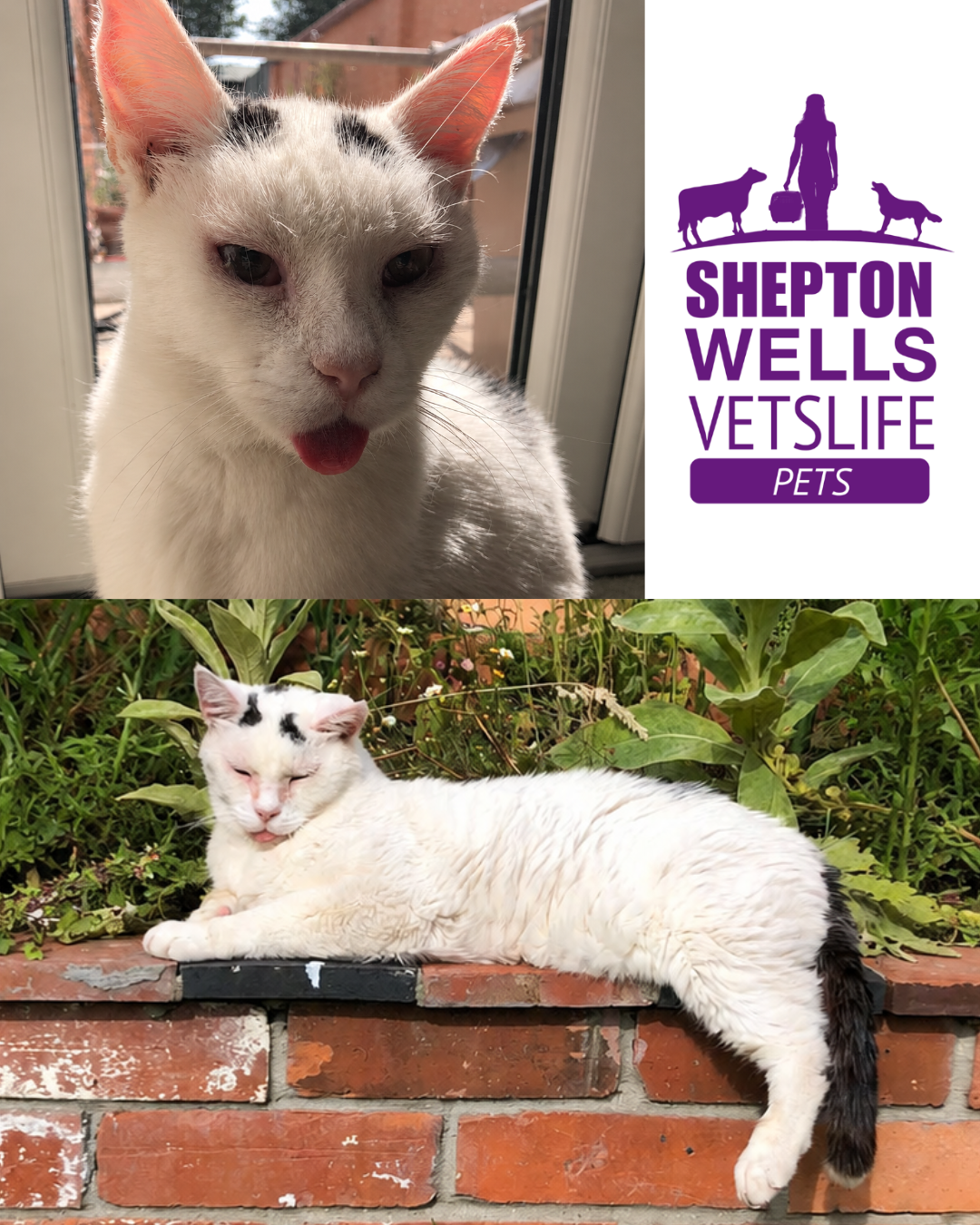
I recently treated Munch (pronounced Monk), a 20-year-old cat who had become increasingly quiet, lethargic and reluctant to eat over several days.
With just one remaining tooth, his owner became concerned when attempts to syringe water into his mouth caused him to repeatedly paw at both sides of his face. It was clear that something was causing him significant discomfort.
On examination, we found considerable inflammation around his remaining tooth, alongside a large, raw-looking, fleshy mass on his lower jaw. The lymph nodes beneath his jaw were also enlarged. This is a non-specific sign that can occur with inflammation or the spread of cancer.
These findings raised some important concerns. The mass could potentially have been an inflammatory reaction associated with dental disease, but unfortunately, an oral tumour was also a strong possibility, particularly given his age. Further investigation, including dental treatment and a biopsy, would be needed to establish a diagnosis.
By this stage, Munch was significantly dehydrated and generally unwell. We discussed the options carefully with his owner before considering any further procedures.
His committed owner was keen to give him a chance, so we admitted him for supportive treatment. This included intravenous fluid therapy, pain relief, antibiotics and medication to help stimulate his appetite and control nausea.
After a night in hospital, with some fantastic care from our amazing night nurse Pam, we were delighted to find that Munch had eaten well and was much brighter and more comfortable. The inflammation in his mouth had reduced, although the large fleshy mass and inflammation around the remaining tooth were still present.
Blood tests were reassuring, with no significant abnormalities identified despite his age. With his appetite returning and his general condition improving, we felt he was well enough to continue recovering at home on antibiotics and anti-inflammatory medication.
However, the underlying oral problem still needed investigating. We arranged for him to return for a general anaesthetic, during which we planned to remove the remaining problematic tooth and the oral mass, sending a sample to the laboratory for analysis.
We explained to his owner that this would be a high-risk procedure. There was a possibility that the mass could prove to be an aggressive type of oral cancer, such as squamous cell carcinoma (SCC), which unfortunately carries a poor prognosis.
Despite this uncertainty, his amazing owner was keen to proceed and give him the best possible chance.
By the time of his planned surgery, his owner reported a remarkable improvement. Munch had been much happier since his hospital stay, rehydration and treatment with antibiotics and anti-inflammatory medication.
Following a careful discussion of the anaesthetic risks and possible outcomes, we proceeded with the procedure at our Wells practice.
Under general anaesthetic, we examined the affected areas in more detail. The mass on the lower jaw was very delicate and had a rich blood supply, meaning it bled easily when handled. Fortunately, dental X-rays showed no obvious involvement of the underlying jawbone, which was encouraging. They also revealed a retained tooth-root fragment beneath the mass, likely from a tooth that had previously undergone resorption.
We were able to remove the majority of the mass, leaving healthy-looking gum tissue behind, and successfully removed the retained tooth-root fragment.
The remaining tooth was also in very poor condition due to advanced periodontal disease, so this was extracted too.
We were very pleased with how the procedure went. Munch recovered smoothly from his anaesthetic and, even better, was eating again during recovery!
He was able to go home with a plan for a follow-up examination while we awaited the laboratory results.
We were delighted when the histopathology results came back. There were no neoplastic (cancerous) cells present. Instead, the sample showed chronic inflammation.
This was a fantastic result and meant we could be much more optimistic about our patient’s recovery.
We suspect the inflammation was triggered by the remaining tooth impacting on the gum tissue, or by the retained tooth-root fragment. Both potential sources have now been removed, so we are hopeful that the affected area will gradually settle down without the need for further surgery.
Munch’s story is an important not to jump to conclusions when elderly patients present with mass-like lesions. Despite their age, there can be non-cancerous causes that are treatable and, in some cases, completely curable.
In Munch’s case, his brilliant owners were committed to investigating the problem rather than simply assuming the worst. We appreciate that this isn’t always possible, as other underlying health conditions can influence the decisions owners make. However, Munch’s otherwise good health helped make the decision to proceed with treatment a little easier.
Anaesthesia is certainly possible in older patients, and age alone should not necessarily be a reason to rule out a procedure. Careful assessment, appropriate preparation and individual consideration of the risks can allow older patients to undergo procedures successfully.
Munch’s story highlights the importance of obtaining a definitive diagnosis. Without laboratory testing, we might have assumed the worst. Instead, we now know that his mass was inflammatory rather than cancerous, and, having removed the potential sources of irritation, we are hopeful that he has an excellent prognosis.

Author –
Harry Connock
BVSc MRCVS
Veterinary Surgeon