A Closer Look at Ear Infections in Pets
Ear problems are one of the most common reasons cats and dogs are brought to the vet. Often, the signs noticed are flicking or rubbing of the ears, soreness and inflammation around the entrance to the ear canal, and discharge of varying types.
Inflammation (otitis) of the ear can be caused by a number of different things. Bacteria, fungi (yeasts), parasites (ear mites), foreign bodies (such as grass seeds) and allergic skin disease can all cause otitis, as can a few other conditions, such as growths in the ear or immune-mediated diseases.
The first thing your vet will do is talk to you about the problem: when it first started, which ear is affected (one or both), whether your pet has been swimming or walking through grassy fields (in the case of dogs), and whether any parasite treatments or ear-cleaning products have been used.
Next, we will examine the ears with an otoscope. This allows us to visualise the full length of the ear canal, including the eardrum, and identify any abnormalities. We need to check that the eardrum is intact, as this may affect the treatment we prescribe. We look for ear mites, any growths, the degree of inflammation present, and the type of discharge within the ear canal.
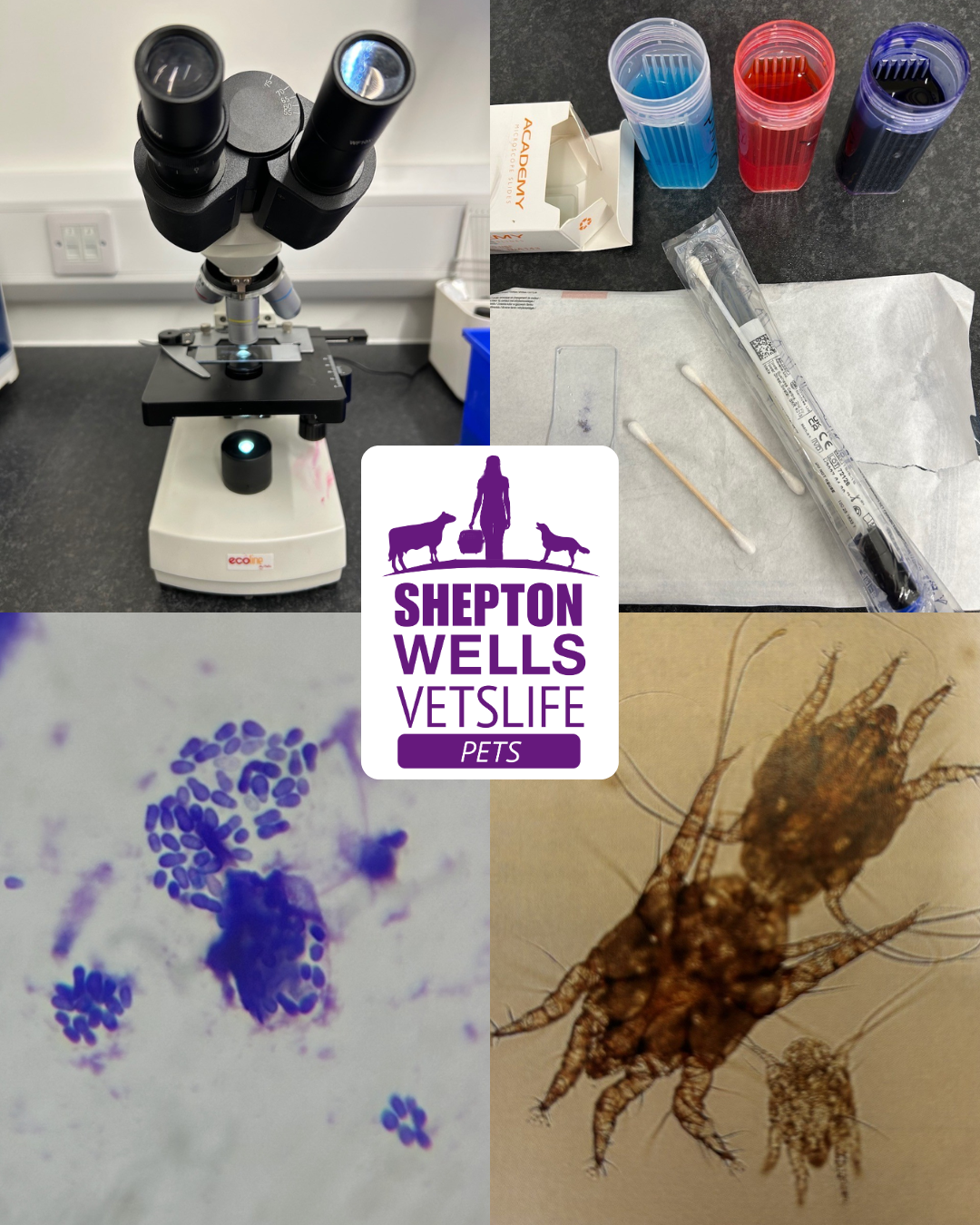
We will then usually take a swab from the ear for cytology (the examination of cells under the microscope) so that we can determine the underlying cause and formulate a treatment plan. We often take samples from both ears, as mild disease can sometimes be present in the ear that appears ‘normal’.
We use special stains and examine slides under a microscope to look for changes and identify the cause of the problem.
Common findings include:
Bacteria – The ear canals of healthy dogs often contain bacteria; however, these are usually present in very small numbers. When bacteria are seen in large numbers alongside inflammatory cells, or when we can see them inside these cells, a bacterial infection is confirmed.
There are broadly two types of bacteria we look for: cocci, which appear as small round dots, and rods, which, as the name suggests, are rod-shaped.
Although we can identify these organisms quickly in this way, we will often recommend culture testing, particularly if we see rods, as these bacteria can be resistant to a number of different treatments.
Yeasts – Malassezia is the yeast most commonly associated with otitis, although it can also be seen in normal ears. Again, high numbers under the microscope are usually consistent with infection. Yeasts may be present alongside bacterial infections or occur on their own. They are relatively easy to identify and have a characteristic footprint or peanut shape.
Mites – Ear mites are a common cause of parasitic otitis, particularly in cats. They have a distinctive appearance and are often associated with a thick, crusty, crumbly discharge. They can occur alongside yeast and bacterial infections.
The findings seen under the microscope provide us with a great deal of information about the cause of the ear problem, allowing your vet to formulate an appropriate treatment plan. This may involve a course of ear drops or tablets. We may also recommend sending a swab away for culture and sensitivity testing to determine the most effective treatment.
Some pets may need sedation or a general anaesthetic to remove a foreign body, such as a grass seed, or to flush out the ear if it is full of discharge, enabling treatment to work more effectively.
Ear infections are not always as straightforward as they seem and can sometimes require prolonged courses of treatment or further investigation. However, they nearly always begin with a look down the microscope, making it one of the most valuable pieces of equipment in the practice.
If you are worried that your pet has a sore ear, it is worth booking an appointment with your vet. They can guide you through the process and help get to the bottom of the problem.