More Than a Snotty Nose: Poppy’s Story
Out of all the cases we regularly deal with and manage long term, such as osteoarthritis, allergies and hormonal disorders, some of the most frustrating are animals (particularly dogs) presenting with chronic nasal discharge.
In some cases, an underlying cause can be identified and treated effectively, including animals that have grass blades or other foreign material lodged in the nose. In other cases, there may be underlying infectious causes – more common in cats, particularly viral infections. However, there is a large group of animals who, despite extensive investigations and biopsies, ultimately receive a diagnosis of ‘chronic idiopathic lymphoplasmacytic rhinitis’ (CILR).
In layman’s terms, this essentially describes a chronically inflamed nose with no identifiable underlying cause, and these cases can be extremely difficult to treat effectively. There is a long list of potential medications, none of which are particularly successful, including antihistamines, oral or inhaled steroids, steroid nasal drops, nebulisation, anti-inflammatories, short courses of antibiotics and intermittent nasal decongestants – the list goes on. Ultimately, the aim is to manage the symptoms as effectively as possible rather than achieve complete resolution. Anyone who has managed this condition will know how frustrating it can be.
So when Poppy, a two-year-old Springer Spaniel, presented with a chronic, snotty nasal discharge from the right nostril along with sneezing, another case of CILR was certainly on the list of differential diagnoses. However, in a young Springer, an inhaled foreign body such as a grass seed was also highly possible, whereas a nasal tumour would be very unlikely at that age.
Poppy was initially treated with a course of antibiotics and anti-inflammatories, which made little difference to her clinical signs. She was then scheduled for further investigations, as these cases generally follow a standard diagnostic pathway consisting of radiographs, nasal flushing and rhinoscopy (passing a camera up the nose), where indicated.
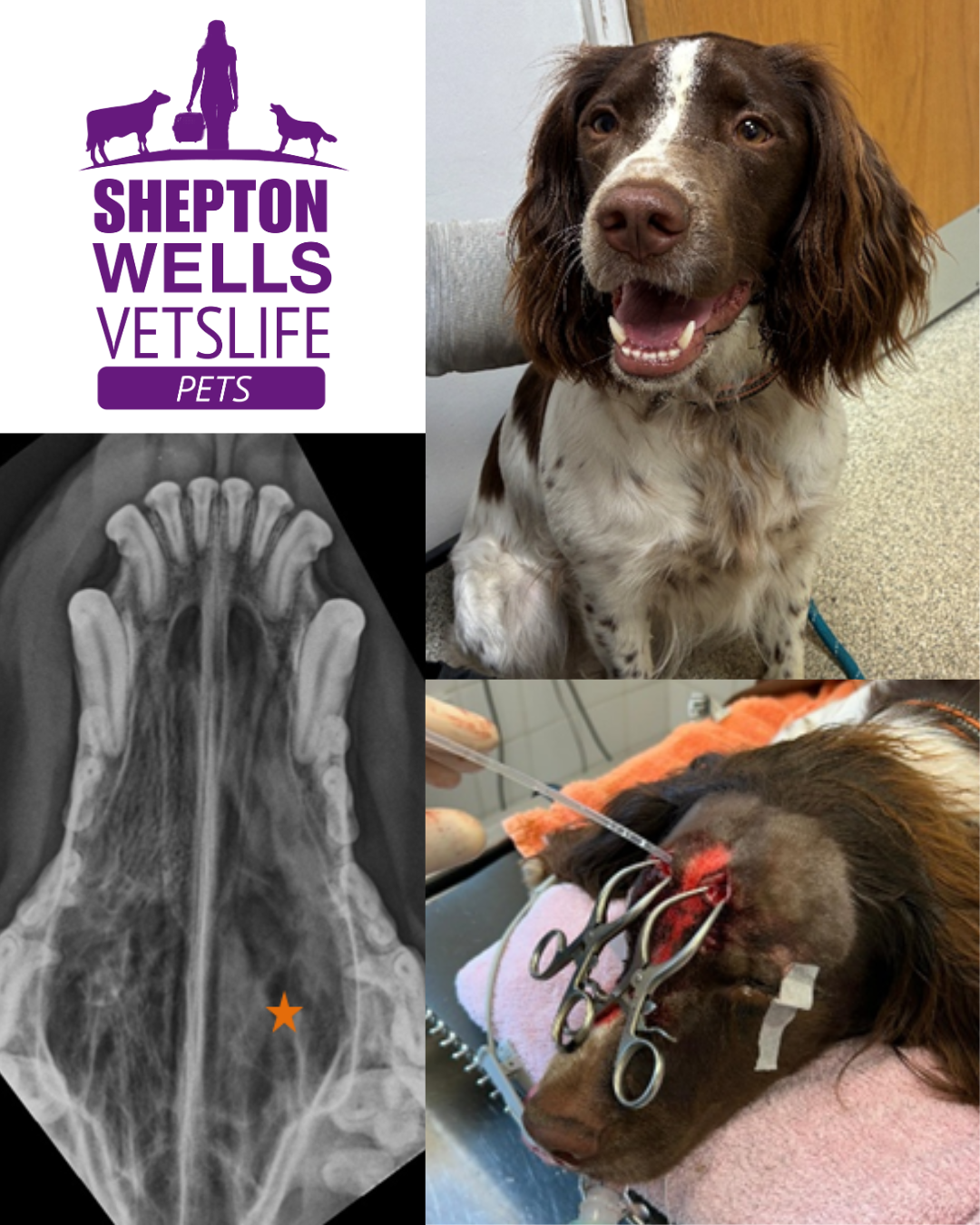
Radiographs of Poppy’s nose showed changes within the right nasal passage. There was loss of definition of the fine bones within the nose, known as the turbinates, suggesting they had been destroyed. Interestingly, the most common cause of turbinate destruction combined with nasal discharge in dogs is a fungal infection called aspergillosis.
We proceeded with rhinoscopy, which confirmed the turbinate destruction seen on the radiographs, and biopsies were taken from within the nose. During the rhinoscopy, we were able to visualise the opening to the frontal sinus, which appeared to contain a semi-solid white structure. Although we were unable to grasp it, it was consistent with a solidified fungal plaque.
Whilst awaiting the biopsy results, Poppy went home and we were so convinced we were dealing with nasal aspergillosis (a fungal infection of the nose) that, even when the biopsies failed to confirm fungal organisms, she was still booked in for treatment the following week.
Nasal aspergillosis is an uncommon but serious fungal infection of the nose that is highly destructive, leading to loss of the nasal turbinates. It can ultimately invade through the surrounding bone into the brain, in which case it becomes fatal.
Treatment involves creating a small hole into the frontal sinus – an air-filled space at the top of the skull that connects to the nose – and flushing the area with saline followed by antifungal liquid and, finally, antifungal cream. This procedure is known as sinus trephination.
Whilst a single treatment is often sufficient, around 15% of dogs require the procedure to be performed twice. Even though most of Poppy’s signs were affecting the right side of the nose, it is common practice to treat both sides, as destruction of the nasal septum separating the two nasal passages can lead to fungal involvement bilaterally. In fact, during trephination of the apparently normal left nasal passage, fluid was seen draining from both nostrils, suggesting communication between the left and right sides.
Poppy has responded very well to the initial treatment so far and recently attended her two-week post-operative check, with a final recheck planned in a further two weeks.
Given the irreversible turbinate destruction that occurred prior to treatment, Poppy is likely to experience some intermittent sneezing and may be more prone to secondary bacterial nasal infections in the future, which will be treated as required. Other than this, she should make an excellent recovery.