
Megan’s Story: Recognising Cushing’s Disease in Dogs
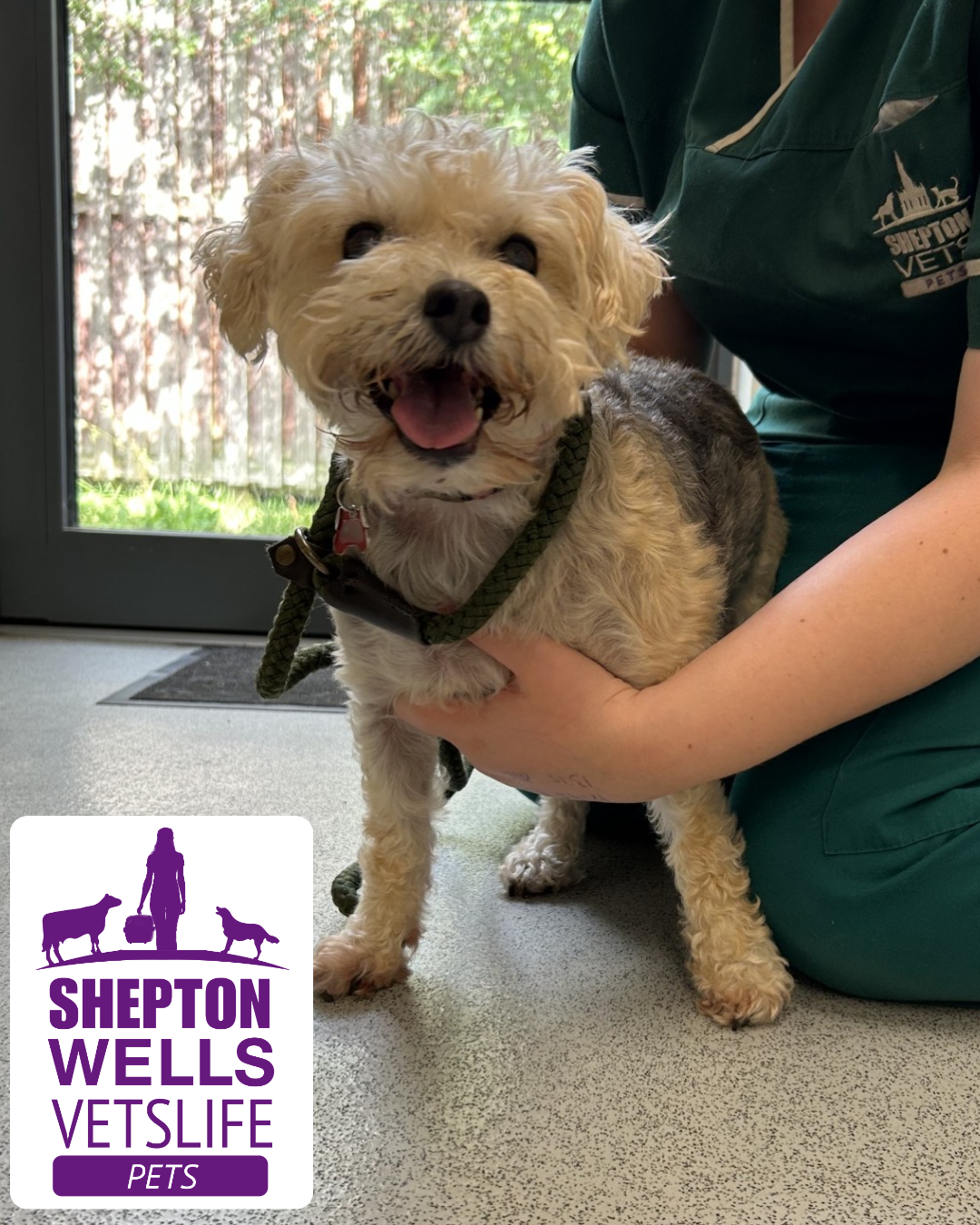
Megan is a lovely little terrier who was brought to see us at our Wells branch because her owner knew that she wasn’t quite herself.
Megan was a little lame and had a small wound on her foot that just didn’t seem to want to heal. She was also an anxious girl who would pant quite a lot whenever she visited us, and we noticed that she had a slightly rounded tummy.
She had already been prescribed some pain relief to keep her comfortable while we investigated her lameness. However, given the combination of symptoms, we decided to run some blood tests to make sure there wasn’t an underlying condition contributing to the bigger picture. One of the conditions high on our list was Cushing’s disease (hyperadrenocorticism).
What is Cushing’s disease?
Cushing’s disease is a condition caused by persistently high levels of the hormone cortisol in the body. Cortisol is an important hormone produced by the adrenal glands, and its production is controlled by signals from the pituitary gland in the brain.
In dogs with Cushing’s disease, this system becomes overactive, resulting in the body producing too much cortisol.
The signs of Cushing’s disease can vary considerably and often develop gradually, which means they can be easy to overlook or simply attributed to getting older.
Common signs can include:
- Increased thirst and urination
- Increased panting
- A rounded or ‘pot-bellied’ appearance
- Skin changes, including thinning of the skin and blackheads
- Wounds that are slow to heal
- Reduced energy
- Muscle wastage
Not every dog will show all of these signs, and some may be subtle at first.
How is Cushing’s disease diagnosed?
Diagnosing Cushing’s disease can sometimes be challenging. Investigations may include blood and urine tests and, in some cases, an ultrasound scan.
It is not always possible to confirm the diagnosis with a single test. Some tests may need to be repeated over time, and other conditions can sometimes occur alongside Cushing’s disease, which can make the results more difficult to interpret.
In Megan’s case, her blood tests showed a very high resting cortisol level, alongside elevated liver parameters. These results increased our suspicion that Cushing’s disease could be responsible for some of her symptoms.
We then performed an ACTH stimulation test, which is commonly used as part of the investigation for Cushing’s disease. Megan’s results were consistent with a diagnosis of Cushing’s disease.
How is Cushing’s disease treated?
Megan was started on daily medication to help control her cortisol production, and she has already begun to respond well to treatment.
We will continue to monitor her closely with regular blood tests, as well as keeping track of her clinical signs and how she is feeling at home. Cushing’s disease is a lifelong condition, so ongoing monitoring and adjustment of medication are an important part of managing it.
The good news is that the outlook for Megan is positive. Although some of the signs of Cushing’s disease can take time to improve, we are hopeful that with appropriate treatment and regular monitoring, Megan can continue to enjoy a happy and comfortable life.
Megan’s case is a good reminder that changes such as increased panting, a rounded tummy or wounds that are slow to heal can sometimes be signs of an underlying condition. If you notice any changes in your pet that concern you, it is always worth speaking to your veterinary team.

Author –