
Common Summer Pet Parasites: How to Spot Them Before They Become a Problem
Summer is one of my favourite times of year. As a veterinary nurse here in Somerset, I love seeing clients making the most of the nice weather with their pets – whether that’s long countryside walks, days at the beach, camping trips or simply relaxing in the garden. Unfortunately, summer is also the time when parasites become much more active, and we often see an increase in pets coming into the practice with unwanted hitchhikers.
The good news is that most parasites are preventable and knowing what to look out for can help you spot a problem before it gets out of hand.
Why Are Parasites More Common in Summer?
Warmer temperatures create the perfect conditions for parasites like fleas and ticks to thrive. With pets spending more time outdoors exploring fields, woodlands and long grass, they’re far more likely to encounter them.
Even if your pet spends most of their time indoors, they’re not completely protected. Fleas can easily be brought into the house on clothing, shoes or by other pets, so it’s not uncommon for indoor cats to end up with fleas too.
Fleas
Fleas are by far one of the most common parasites we see during the summer months. They reproduce incredibly quickly, with one flea laying dozens of eggs every day, so a small problem can soon turn into a much bigger one.
Signs your pet may have fleas:
- Excessive scratching or biting at their skin
- Red, irritated skin
- Hair loss
- Small black specks in the coat (often called “flea dirt”)
- Visible fleas moving through the fur (easier to spot on short fur animals)
Fleas are much more than just an itchy nuisance. They can cause flea allergy dermatitis, transmit tapeworms and, in severe cases, even lead to anaemia, particularly in puppies, kittens and smaller pets. Flea infestations can quickly get out of control; we regularly recommend for clients to treat their homes with a suitable flea spray to fully ensure their reproduction cycle is broken.
Ticks
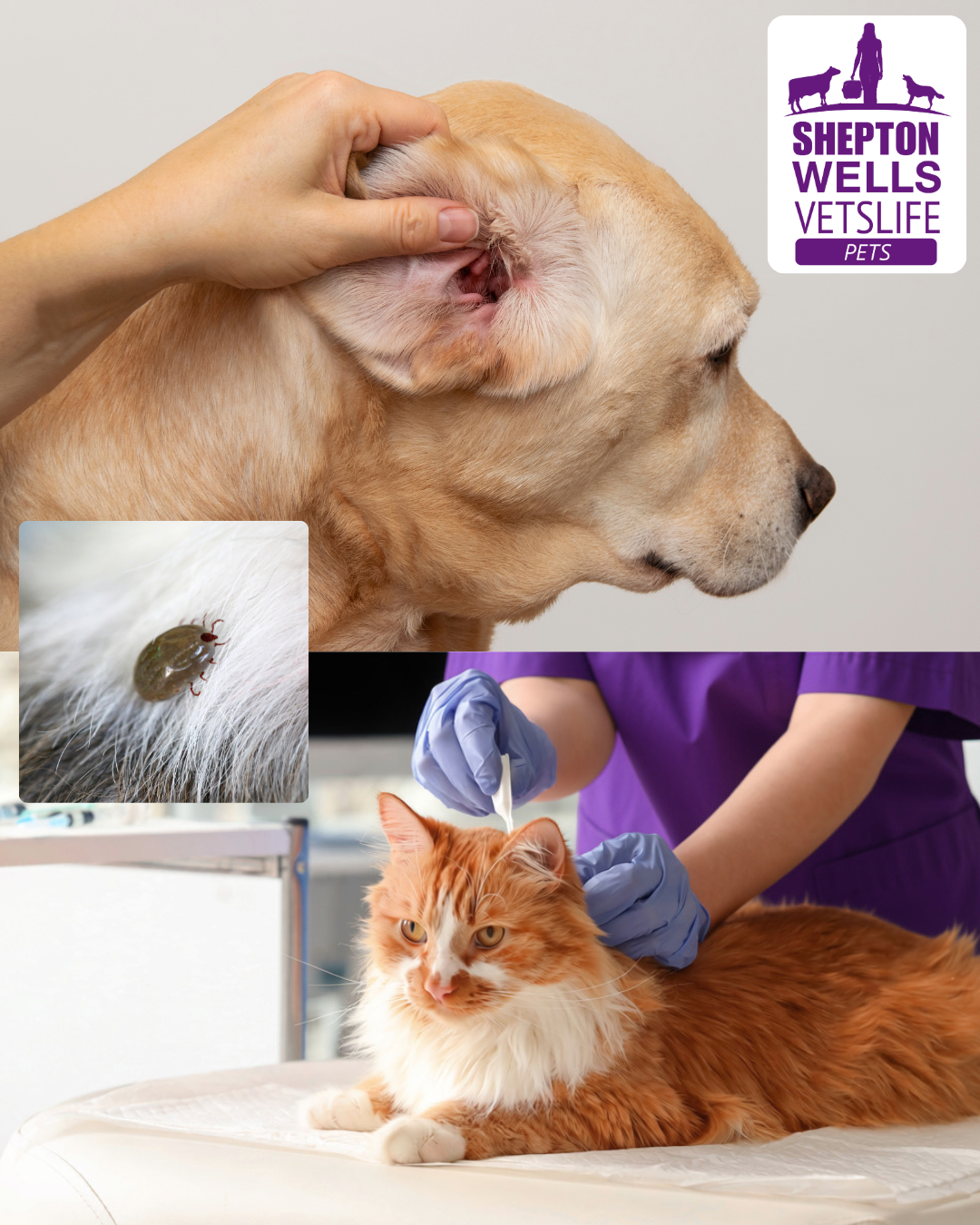
Here in the countryside, ticks are commonly picked up in long grass, woodland areas and even some local parks. Dogs that enjoy countryside walks are especially at risk during the warmer months.
One thing we see surprisingly often in practice is owners mistaking skin tags, small lumps or even nipples for ticks! If you’re ever unsure, don’t try to remove it yourself. We’d always rather you pop into the practice so we can have a quick look and make sure it’s removed safely if it is a tick.
How to spot a tick:
- A small grey, brown or black bump attached firmly to the skin
- Swelling or redness around the bite
- Your pet repeatedly licking or chewing one area
- Occasionally appearing quieter than usual if illness develops
Ticks can carry diseases that affect both pets and people, so it’s important they’re removed correctly and as soon as possible.
After every countryside walk, make it part of your routine to check around your pet’s ears, neck, under the collar, between the toes, in the armpits and around the groin – these are all favourite hiding places for ticks.
Mites
Most mites are too small to see with the naked eye, but they can cause some very noticeable symptoms.
Keep an eye out for:
- Intense itching
- Crusty or scaly skin
- Hair loss
- Frequent head shaking
- Ear scratching or dark discharge from the ears
Some types of mites are contagious between animals, so it’s always worth getting your pet checked if you notice any of these signs.
Intestinal Worms
Dogs and cats can pick up intestinal worms from contaminated soil, infected prey, fleas or contact with infected faeces. Puppies and kittens are particularly vulnerable, but adult pets can also become infected.
Symptoms may include:
- Diarrhoea
- Vomiting
- Weight loss
- A swollen or pot-bellied appearance
- Scooting along the ground
- Worms visible in faeces or around the tail
Keeping up to date with your pet’s worming treatment is one of the easiest and most effective ways to protect their health.
When Should You Contact us?
I’d always recommend getting your pet checked if you notice:
- Persistent scratching or chewing
- Sudden hair loss
- Red, sore or inflamed skin
- Unexplained weight loss
- Vomiting or diarrhoea
- Lethargy
- Visible parasites or unusual lumps attached to the skin
Many parasite problems are straightforward to treat when caught early, so don’t be afraid to ask if you’re unsure. We’d much rather have a quick look than have your pet left uncomfortable.
Preventing Summer Parasites
Thankfully, preventing parasites is much easier than treating a large infestation.
Here are a few simple tips:
- Keep flea, tick and worm treatments up to date.
- Check your pet thoroughly after countryside walks.
- Wash pet bedding regularly on hot settings
- Vacuum carpets and soft furnishings if you suspect fleas.
- Keep your garden tidy by cutting back long grass.
- Pick up dog waste promptly.
- Bring your pet for regular health checks and discuss the best parasite prevention plan for their lifestyle.

Author –